


International Trump Flies to Asia After Election Setback…Plays 'Kim Jong Un Card' Against Xi and Putin

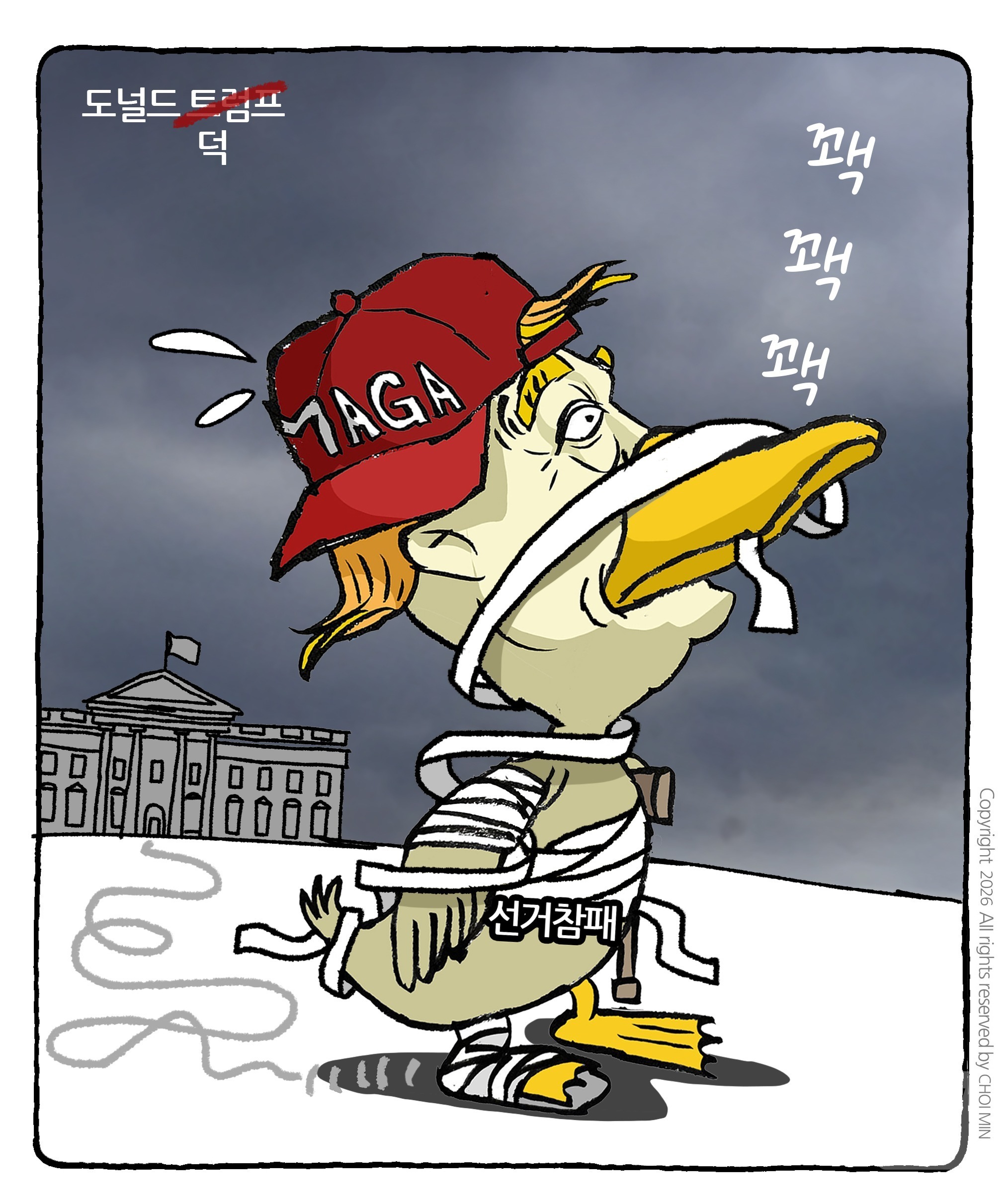
US President Donald Trump embarked on an Asia tour on the 3rd amid a midterm election defeat that has narrowed his domestic political footing. While his move aims to revive governmental momentum by leveraging major summit diplomacy events, many observers believe it will be difficult to achieve tangible results due to his weakened negotiating position and conflicting interests among major powers.
President Trump began his Asia tour on the 16th (local time), first visiting Manila, Philippines, where the Association of Southeast Asian Nations (ASEAN) Summit will be held, followed by Shenzhen, China, which will host the Asia-Pacific Economic Cooperation (APEC) Summit. This is his first overseas trip about two weeks after Republicans lost their majority status in both the House and Senate to the Democrats. When asked by reporters at the White House just before departure whether the election defeat would weaken his influence overseas, he flatly responded, "No."
The 'Tour Card' to Cover Up Domestic Setbacks…Used by Past US Presidents
Turning to the diplomatic stage after an election defeat to highlight one's presence is a favored pivot strategy among past US presidents. Former President Bill Clinton, who visited the Philippines after Democrats lost the House for the first time in 40 years in the 1994 midterm elections, is a prime example.
The Associated Press noted that "President Trump may prefer to be with foreign leaders rather than face his shaky support base at home." Ed Keagan, who served as Malaysia Ambassador under the Biden administration, also told AP that "summit diplomacy accompanied by grand ceremonial protocols is a means to divert public attention and reinforce the message that 'the president is still the president.'"
Trilateral Talks and North Korea-US Contact Floated…But 'Exploratory Phase' Without Operational Coordination
The highlight of this tour is the first-ever US-China-Russia trilateral summit scheduled to be held in Shenzhen, China on the 19th. President Trump said he would meet with Chinese President Xi Jinping and Russian President Vladimir Putin to discuss nuclear disarmament, the Ukraine war, the Iran situation, and trade issues.
On his way out of the country, even before reporters asked, Trump said "I could also meet with North Korean State Affairs Commission Chairman Kim Jong Un" and "whether I go to China depends on Chairman Xi," floating the possibility of a surprise North Korea-US meeting.
However, diplomatic circles view it unlikely to translate into tangible results, with only the stage set. In the case of nuclear disarmament, China—which possesses fewer nuclear warheads than the US and Russia—has consistently refused to participate in discussions. Similarly, regarding the Ukraine war, the gap in positions between Russia and Ukraine remains wide, making it difficult to expect anything beyond declarative agreements.
As for North Korea-US contact, US administration officials have drawn a line saying there are no separate advance plans, and North Korea has shown no signs of willingness to engage in dialogue, making it likely to amount to one-sided exploration without operational coordination.
Weakened Negotiating Power with China and Congressional Pushback…Variables for Korean Peninsula Security
Assessments also suggest that President Trump's hand in trade negotiations is not as strong as before. While maintaining an unstable truce in the trade war, China will likely strongly demand that Trump—cornered domestically by election defeat—cease arms sales to Taiwan and ease regulations on advanced semiconductors.
The Democratic offensive awaiting upon his return is also a burden. The Democrats, who will become the majority party in both chambers next January, have announced strong-armed congressional hearings targeting the administration's unilateral tariff policies, military operations in Iran, and conflict-of-interest issues involving administration insiders.
If President Trump, desperately seeking a domestic political breakthrough, becomes fixated on short-term gains and pursues a 'big deal' among great powers without sufficient coordination with allied nations, it could have considerable repercussions on Korean Peninsula security and the trade environment.


Loading comments…