


Feature Receiving Healthy Care Where You Live…Suwon's Integrated Care Experiment

Even when losing health, whether one loses everything depends on how well-structured the social safety net is. If the community fills the gaps where care is needed, anyone can maintain a healthy daily life where they live. Let us trace how far Suwon City's integrated care project has come.
'Saebbit Care Station' Providing In-Home Care
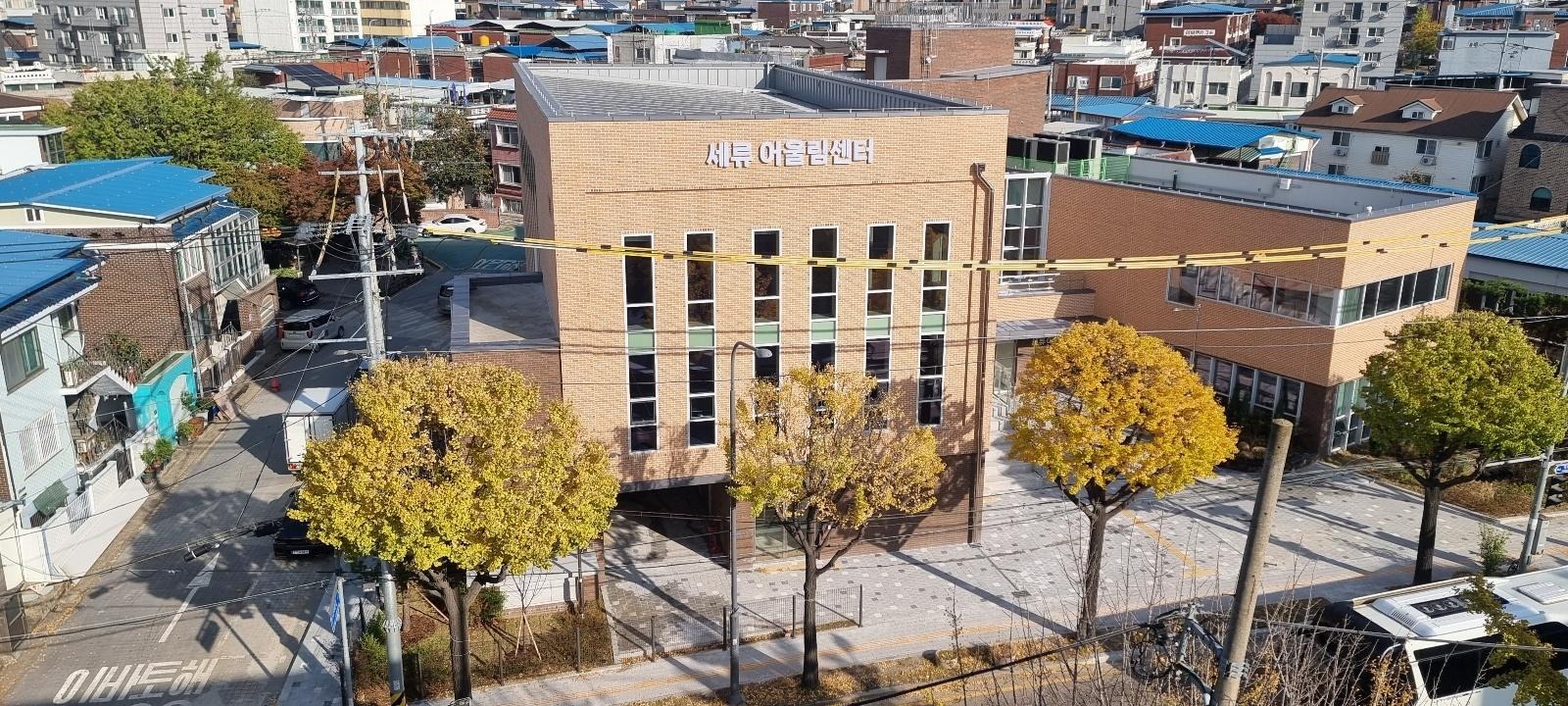
A sign reading "Saebbit Care Station" hangs on a four-story brick building in the residential area of Younghwa-dong, Jangan-gu, Suwon. The windows and door handles are equipped with safety features, making it look somewhat special. It is an integrated care house that the city of Suwon began operating in May as a "middle house" concept between hospital and home.
The care station, equipped with an elevator, operates five units on floors 2 through 4. Suwon City and Korea Land & Housing Corporation remodeled elderly-designated public rental housing to enhance safety and convenience features. In studio or 1.5-room units, round safety bars are installed within reach from the entrance, and bathrooms are equipped with anti-slip tiles and mats, as well as safety chairs.
Saebbit Care Station is a residential and recovery space where residents can stay for up to 60 days and receive full-scale medical, health, and care services, focusing only on recovery. Primarily discharged patients with mobility difficulties move in and receive treatment and care from professional occupational therapists and caregivers stationed during the day.

Every morning, a nurse visits to check each patient's health condition and delivers nutritious meals.
There is a 'Residential Safety Plus program' that makes life easier for integrated care beneficiaries. Starting in September, the city added a program that improves risk factors such as falls in residential environments. It supports approximately 20 environmental improvement items within a limit of 2 million won per household.
Professional Home Visit Medical Services
Suwon City is drawing favorable responses from the field by introducing services combining healthcare and care through the 'Visiting Health Aide' program.
Centered on Jangan-gu Health Center, home medical centers are operated at seven medical institutions. Medical institutions designated as home medical centers establish care plans for seniors aged 65 and older with mobility difficulties, providing regular home visits and customized exercise management and nutrition management.

The city operates 'Visiting Health Aides' that visit weekly to monitor the condition of elderly residents suffering from chronic diseases in advance and help them maintain their health. They inform home medical centers of accurate conditions to enable appropriate response and help people live stably without using emergency rooms.
Working in pairs of two and visiting beneficiaries at the same time each week, visiting health aides carefully teach elderly patients unfamiliar with medical devices how to accurately measure their own body temperature, blood pressure, and blood sugar.
Suwon also operates a special integrated care program for discharged patients called 'Bridge Care Management 30,' which received approximately 60 million won in project funding from the Gyeonggi Welfare Foundation. During the critical 30-day transition period after discharge when health management is most essential, a dedicated care coordinator establishes a support plan and provides services including safety inspections, medication organization and compliance guidance, psychological counseling, and accompaniment to outpatient appointments.
Integrated Care System Taking Responsibility for Aftercare
Suwon City provides services across six major areas—healthcare, health management and prevention, long-term care, daily living care, and housing welfare—totaling 79 types of services through integrated care. As of the end of September, the city supported 3,400 services for 927 people, coordinating an average of 3.7 customized services per person.

The characteristic of Suwon's integrated care is that it has a system supporting people who are frail, disabled, or facing illness and need care—from discovery through support and post-care—so they can continue their original daily life where they live.
In early this year, Suwon City concentrated administrative efforts to identify priority management targets as it implemented integrated care full-scale. The city conducted a complete survey of approximately 33,000 total beneficiaries aged 65 and older, including long-term care beneficiaries, priority care groups, and elderly people with disabilities, and identified 992 priority management targets.
Since March, 23 hospitals in the region, including university hospitals such as Ajou University Hospital and Catholic University St. Vincent's Hospital, have established cooperation and participated in the 'Discharged Patient Support Service.' Over the past six months, more than 100 patients scheduled for discharge have been referred as integrated care beneficiaries and received customized services.
Suwon Mayor Lee Jae-jun stated, "Suwon City will continue to expand warm welfare services so that no citizen experiences difficulties due to care gaps."
Loading comments…