

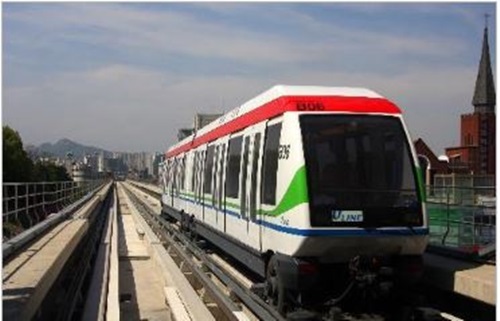
Uijeongbu City Issues Statement on Light Rail Project Bankruptcy
Respected citizens of Uijeongbu City!
At this moment, I must regrettably announce that the Uijeongbu Light Rail Transit, which serves as your transportation lifeline and a key pillar of our city's public transportation system, has been unable to overcome operational difficulties. Consequently, the business operator, Uijeongbu Light Rail Transit Corporation, has filed for bankruptcy with the court following a board resolution to do so.
As you are aware through various media reports, Uijeongbu Light Rail Transit Corporation, facing intensifying operational deficits, proposed an "adjustment to business implementation conditions" in November 2015, requesting annual financial support of 14.5 billion won from our city.
Subsequently, our city proceeded with consultations for the normalization of the light rail project through reviews conducted by the Korea Development Institute's Public Investment Management Center (PIMAC) in accordance with relevant laws and regulations. However, the business operator rejected the city's proposal for annual financial support of approximately 5 billion won to cover operational deficits and ultimately chose the extreme step of bankruptcy.
Regardless of the reasons, we deeply regret any anxiety and concern this has caused residents, and we wish to enhance public understanding and alleviate concerns by explaining both the background and future plans for the light rail project, along with our commitment to make every effort to continue operations.
The Uijeongbu Light Rail Transit project was promoted as a "private investment project" jointly funded by the public and private sectors.
Following the designation of the Uijeongbu Light Rail Transit project as a private sector-led project under national public bidding in 1999, our city designated the GS Consortium as the preferred negotiation partner in 2004. After reviews by the Korea Development Institute's Public Investment Management Center and negotiations, as well as deliberation by the Ministry of Planning and Budget's Private Investment Project Review Committee, the project was pursued through the execution of an "Implementation Agreement for the Uijeongbu Light Rail Transit Private Investment Facility Project" with Uijeongbu Light Rail Transit Corporation in April 2006.
The Uijeongbu Light Rail Transit, which opened in July 2012, was constructed with a total project cost of approximately 670 billion won, with the ratio of investment as follows: 48% from national treasury, provincial funds, municipal funds, and development-related contributions; and 52% from private investment by the business operator. Uijeongbu Light Rail Transit Corporation, the business operator, is composed of seven investors: GS Engineering and Construction, Korea Land Development, Hannil Construction, Isoong Construction, LS Industrial Systems, Sistra, and Unison.
The Uijeongbu Light Rail Transit project constructed in this manner is a private investment project of the BTO (Build-Transfer-Operate) method, whereby Uijeongbu City, as the competent authority, holds the ownership of the facility, while Uijeongbu Light Rail Transit Corporation, as the business operator, acquires management and operation rights to maintain, manage, use, and operate the business facility free of charge for 30 years.
Following its opening, Uijeongbu City implemented various light rail activation policies.
Despite the operational responsibility resting with the business operator, our city made efforts to implement various activation policies.
At the time of opening, we implemented fare discounts for children and youth as well as free-ride policies for national merit awardees. From 2013 onwards, we expanded the free-ride program to include people with disabilities, providing full support for demand activation and improved mobility rights for the disabled.
Additionally, to enhance convenience and accessibility for light rail users, we installed various amenities such as exercise equipment, children's playgrounds, and bicycle storage facilities in the basement areas of stations, creating leisure spaces where citizens can enjoy exercise and rest. Particularly in 2016, we commissioned a separate project for environmental improvement in the light rail basement areas, and from 2017, we are undertaking a five-year plan involving landscaping work tailored to the characteristics of each section and installing eco-friendly irrigation facilities, making continuous efforts to establish the light rail as a more familiar transportation system for residents.
Meanwhile, in 2014, we implemented a senior free-ride program allowing citizens aged 65 and older to use the light rail for free as a preliminary step toward introducing the Metropolitan Transit Integration Discount System. In December 2014, we introduced the Metropolitan Transit Integration Discount System, allowing light rail users to receive the same transfer discount benefits available on the Seoul Metropolitan Subway.
Although this implementation process involved negotiations and disputes lasting more than a year between the business operator and our city over loss-sharing issues related to transfer discounts and senior free rides, with the business operator even initiating project termination procedures in September 2013, our city wisely overcame the crisis with support from Gyeonggi Province and securing loss-sharing commitments from the business operator, successfully establishing the system.
As a result, we increased daily ridership from approximately 12,000 on the opening year to approximately 36,000 today, establishing the Uijeongbu Light Rail Transit as a true representative brand of our city. As convenience of the light rail became widely recognized among residents, ridership numbers continue to show an upward trend.
Despite light rail activation efforts, the business operator's operational deficit deepened.
However, despite these activation efforts, the business operator's operational deficit intensified.
The Uijeongbu Light Rail Transit Implementation Agreement contains a Minimum Revenue Guarantee (MRG) clause whereby when actual operating revenue reaches 50% or more of projected operating revenue, Uijeongbu City guarantees the business operator up to 80% of projected operating revenue for the initial 5 years, and up to 70% for the subsequent 5 years.
However, although ridership numbers increased with the full implementation of the Metropolitan Transit Integration Discount System, actual ridership reached only 30% of projected demand under the implementation agreement. Consequently, the business operator failed to receive MRG support from Uijeongbu City, and the situation persisted wherein operating revenue could not even cover operational costs.
Furthermore, the repayment burden of loan principal and interest, which the business operator had borrowed from financial institutions to finance its investment, placed additional strain. The business operator claimed annual operational deficits of 200 to 300 billion won, including operational losses of approximately 50 billion won and investment repayment amounts of approximately 150 billion won.
Consequently, the business operator's capital was completely depleted by July 2014 with accumulated losses of 911 billion won, and as of September 2015, it claimed cumulative deficits of approximately 200 billion won (including approximately 100 billion won in depreciation of intangible management and operation rights), raising questions about the project's viability.
The business operator proposed business implementation condition adjustments requesting annual financial support of 14.5 billion won from Uijeongbu City.
In November 2015, Uijeongbu Light Rail Transit Corporation, claiming that normal operation of the light rail would be impossible under current management conditions, proposed an "adjustment to business implementation conditions" requesting annual financial support of 14.5 billion won based on Article 33-3 of the "Basic Plan for Private Investment Projects."
The proposal stipulated that should the project be terminated, our city would make lump-sum payments equal to the termination payment the business operator would receive under the agreement, distributed over 25 years and 6 months at 14.5 billion won annually with interest. In return, the business operator would use this as collateral to pursue refinancing to lower interest rates and extend repayment periods on existing loans, with investors supplementing any remaining funds to continue light rail operations.
Our city accordingly requested a review of the business operator's proposal by the Korea Development Institute's Public Investment Management Center (PIMAC), a state research institute under the Ministry of Economy and Finance. PIMAC concluded that the current light rail situation would be difficult to operate normally without substantial additional capital investment from investors, and that it would be reasonable to regard this as grounds for business implementation condition adjustments under Article 33-3(1)(2) of the "Basic Plan for Private Investment Projects." However, regarding whether to proceed with such adjustments, PIMAC stated that "the competent authority should conduct multifaceted reviews of impacts on the public interest and decide on project continuation and methods," while presenting an incomplete opinion that "there is potential conflict with higher-level law, though this is done in practice," leaving the decision on whether to accept the business operator's proposal to the city.
The city proceeded with consultations with the business operator but failed to find common ground.
After PIMAC completed its review, our city engaged in consultations with the business operator from September onwards (six in-person meetings and five written exchanges), but the consultations showed no progress.
Our city set preconditions for negotiations, including submission of a "business operator's operational improvement and self-help plan," "countermeasures to prevent future project re-termination risks," and "risk distribution through shared financial burden," but the business operator refused the city's requests, maintaining its original position on funding amounts without proposing specific countermeasures.
However, recognizing that the path to disruption of the Uijeongbu Light Rail Transit, a public asset, must be blocked, our city established a "Light Rail Project Normalization Task Force" comprising experts in law, accounting, finance, railways, and administration to seek a rational approach that would minimize city fiscal burden while ensuring stable light rail operations.
After three years of consulting on the Uijeongbu Light Rail Transit project and seeking extensive advice from law firms and accounting firms specializing in private investment projects, conducting rigorous review and deliberation to find the best alternatives, our city comprehensively considered the institutional purpose of the private investment law to promote private investment and expand/operate social infrastructure, the public interest impacts of potential light rail disruption and citizen inconvenience, and the city's fiscal conditions including available resources and equity in resource allocation across other public sectors. Based on Article 53 of the "Act on Private Investment in Social Infrastructure" and Article 37 of its Enforcement Decree, which authorize competent authorities to provide financial support to business operators, our city proposed a temporary support plan for the business operator covering approximately 50 billion won in net operational losses and reasonably anticipated additional costs (50 billion won + α).
However, the business operator rejected our city's proposal, citing difficulties in refinancing, and negotiations made no further progress, with the city's position on approximately 5 billion won in operational support and the business operator's demand for 14.5 billion won annually remaining unresolved.
Ultimately, the business operator chose bankruptcy.
The business operator had financed most of its total private investment of approximately 380 billion won through debt borrowing from financial institutions, with the exception of 91.1 billion won in equity capital. The multiple financial institutions that provided such loans are called lenders. The lenders for the Uijeongbu Light Rail Transit project are five financial institutions: Kookmin Bank (as the lead bank), NH Bank, Mirae Asset Maps Asset Management, Hanwha Life Insurance, and Dongyang Life Insurance.
Between these lenders and the business operator, there is a provision in the agreement allowing lenders to demand termination of the light rail project's implementation agreement if actual fare revenue continuously falls short of 30% of the estimated fare revenue under the implementation agreement for two or more consecutive years, or falls short of 50% and both the lead bank and investors agree. This "mid-term termination right" clause in the implementation agreement became exercisable as of July 2014, two years after opening, but was postponed to the end of 2015 with expectations of the Metropolitan Transit Integration Discount System implementation, and then further postponed to the end of 2016 in anticipation of the business implementation condition adjustments proposed by the business operator.
However, as consultations between our city and the business operator showed no progress, the lenders determined that recovery of loan principal and interest would be difficult due to failure of the light rail project's business implementation condition adjustment, and in accordance with their agreement with the business operator, exercised the "Uijeongbu Light Rail Transit Implementation Agreement Mid-term Termination Right" on January 2, 2017. Accordingly, the business operator held a board meeting on January 11, 2017, composed of investors, to resolve on bankruptcy under Article 75(1)(7) of the implementation agreement—termination due to bankruptcy—and submitted a bankruptcy petition to the Seoul Central District Court.
Uijeongbu City will humbly accept the business operator's unethical bankruptcy petition that disregarded corporate social responsibility.
We express deep regret at the decision of the seven investors, including GS Engineering and Construction, to reject our city's operational cost support proposal and abandon their 30-year obligation to operate the light rail under the implementation agreement, disregarding corporate social responsibility.
It is appropriate that the borrowed capital raised for the private investment project be repaid by the business operator itself; the fact that it sought to resolve this through city support raises questions about whether the business operator truly had the will to responsibly operate as the project operator.
Furthermore, while Uijeongbu City, which has no financial support obligations, proposed support for operational costs for the public good to prevent light rail disruption, we must ask whether it was appropriate for the business operator to so easily abandon a project of public character simply because corporate profits fell short, disregarding corporate social responsibility.
This bankruptcy petition by the business operator represents the first case of a private investment project entering bankruptcy during operations, and attention will focus on whether the court will rule on bankruptcy by excluding the public interest characteristics of the light rail as public transportation and apply the same criteria as in general corporate bankruptcy cases based solely on business conditions.
If the court accepts the business operator's bankruptcy petition, apparently aimed at receiving substantial termination payments, this would condone moral hazard by companies participating in private investment projects, release them from contractual responsibilities, spread negative perceptions about the private investment system as a whole, and constitute a decision seriously contrary to the public interest that could disrupt public transportation serving approximately 36,000 daily users.
We anticipate a wise decision by the court that aligns with the fundamental purpose of the private investment system and reconsiders what priority should be given to public versus private interests. Even in the worst-case scenario, public interest-oriented measures must accompany the proceedings, including requiring the business operator to continue operations until our city selects an alternative operator and smoothly takes over and operates the light rail, thereby minimizing public interest harm.
Uijeongbu City will make every effort to ensure continued light rail operations and prevent disruption.
Our city views the business operator's bankruptcy petition as an unfaithful decision that abandons responsibility under the implementation agreement; however, we maintain a firm position that the public interest aspect of transportation convenience for light rail users must be given top priority.
From this point forward, we will approach preparations for light rail stabilization following bankruptcy, including "alternative operator selection" and "stable facility takeover," carefully and thoroughly to ensure residents face no inconvenience.
Additionally, the selection of an alternative operator will be pursued through a stable approach that meets public interest standards and minimizes fiscal burden by examining similar precedent cases. Throughout this process, we will make every effort to ensure that light rail operations continue without interruption, so residents experience no inconvenience in using the light rail.
We will also regularly disclose progress to media to fulfill residents' right to information, and through close coordination and cooperation with the city council and local national assembly members, we will address challenges together and overcome difficulties wisely by pooling our wisdom.
Furthermore, we will establish a task force to respond to the business operator's bankruptcy, actively addressing alternative operator selection, facility takeover, funding arrangements, and public communication in each respective field. We will make decisions regarding the light rail project's continuation based on consultations from domain experts in law, accounting, and other fields, proceeding with repeated deep consideration and review in the most rational direction.
Although many challenges are anticipated for the Uijeongbu Light Rail Transit to return to normal operations, if residents maintain continued interest and provide loving support, we promise to fully mobilize all city resources and make every effort to stabilize the light rail system.
Thank you.
January 12, 2017
Uijeongbu City


Loading comments…