


'Gyeonggi Province Mental Health Care Project' Receiving Positive Evaluation
Suwon NewsPublished 2019.10.23 06:49
Gyeonggi Province announces survey results on awareness of 'Mental Health Care Project' among 1,000 residentsMost respond positively: 67% say doing well, 84% willing to apply or recommend, 79% say it will help address social problems, etc.
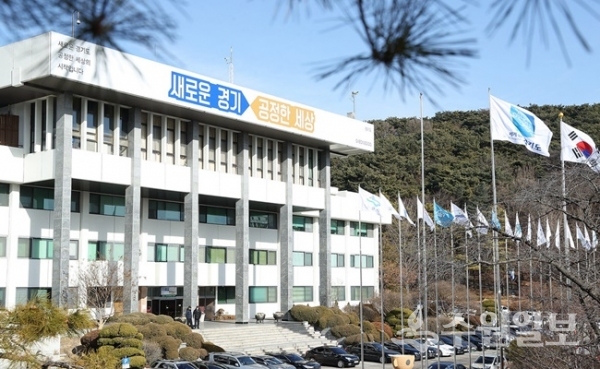
[Suwon Ilbo=Park No-hun Reporter] A survey has found that most residents of Gyeonggi Province are evaluating positively the 'Mental Health Care Project,' which the province is implementing for the first time nationwide.
The project provides ▲support of up to 400,000 won for 'initial psychiatric treatment' to residents living in the province for one year or more ▲full coverage of 'out-of-pocket expenses' for patients with severe mental illnesses requiring emergency hospitalization and outpatient treatment ▲deployment of 'mental health specialists' at 10 cooperating medical institutions in the province to help sustain treatment for patients with mental illness. The project aims to reduce the financial burden on residents and prevent interruption of treatment for patients with severe mental illnesses.
The province announced on the 23rd the survey results on awareness of the 'Gyeonggi Province Mental Health Care Project' conducted from the 12th to the 13th targeting 1,000 residents.
According to the survey results, 67% of respondents evaluated the Mental Health Care Project as 'doing well' (27% very much, 40% generally), while only 18% said it was 'doing poorly.'
When asked about their willingness to directly apply for the 'Mental Health Care Project' or recommend family members or acquaintances, 84% responded 'yes' (84% very much, 28% generally). When asked whether the 'Mental Health Care Project' will help reduce social problems, 79% responded that it 'will be helpful' (28% very much, 51% to some extent).
The results are interpreted as reflecting the residents' positive evaluation of the 'Mental Health Care Project' being promoted during the 7th elected-term administration.
In particular, the majority of respondents expressed support for 'introduction of a severe mental illness patient management system' and 'administrative hospitalization system,' confirming that an overwhelming majority of residents believe that active public intervention is necessary to address mental illness issues.
First, regarding the question on the necessity of a 'severe mental illness patient management system,' 93% of respondents (54% very much, 38% generally) responded 'necessary,' while only 6% said it was 'not necessary.'
Regarding the 'administrative hospitalization system' implemented for patients with severe mental illnesses who pose risks of self-harm or harm to others, 81% (36% very much, 45% generally) responded that it was 'appropriate,' while 17% responded that it was 'not appropriate.'
When asked which is more important between 'prompt hospitalization treatment' and 'human rights protection' for patients with severe mental illnesses, 68% of respondents answered "it is important to hospitalize them promptly," while 28% answered "it is important to make hospitalization procedures stricter to protect human rights."
When asked whether there is a need to revise the current 'Mental Health Welfare Act,' 68% of respondents answered "legal amendments are necessary to expand reports of suspected cases to enable timely treatment of patients with mental illnesses," while 29% responded "the current system should be maintained to protect patient rights and facilitate community adaptation."
Additionally, regarding the question of whether people are reluctant to visit psychiatric medical institutions, 73% responded "not reluctant" and 25% responded "reluctant."
The reasons for reluctance to visit hospitals included ▲negative views from surrounding people (31%) ▲negative perception of psychiatric hospitals (19%) ▲concerns about treatment records remaining (19%) ▲economic burden (11%) ▲difficulty in accepting the fact of having a mental illness (11%), and others.
Ryu Young-chul, director of the Gyeonggi Province Department of Health and Wellness, said, "Through this survey, we were able to understand residents' appreciation of the importance of early diagnosis of severe mental illnesses and their strong demands for a management system," and added "As residents' expectations for the Mental Health Care Project have been confirmed, we will do our best to ensure the project is successfully promoted."
This survey was conducted by K-Stat Research Co., Ltd. through telephone interviews. The survey results have a 95% confidence level with a margin of error of ±3.1%p.
© Suwon Ilbo. Unauthorized reproduction and redistribution prohibited.



Loading comments…