


Namyangju City Mobilizes Rapid Response System to Minimize Heavy Rain Damage
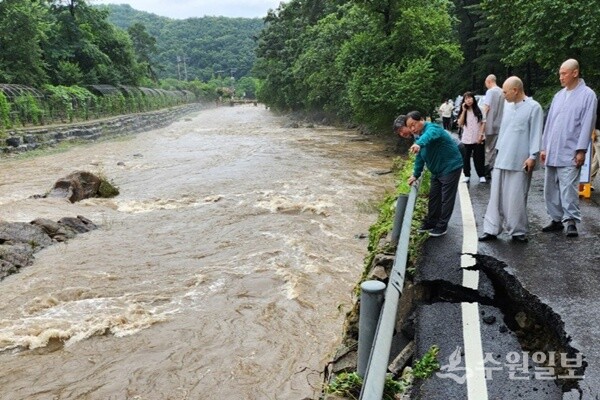
[Suwon Ilbo=Reporter Eom In-yong] Namyangju City conducted an emergency inspection on the 20th of areas affected by flooding and road erosion due to heavy rain, and launched field-oriented response measures to secure citizen safety and facilitate swift restoration.
This inspection was carried out to minimize actual damage and implement a rapid response system, as various damages have been occurring throughout the city due to continuous heavy rain that began on the 16th.
As of 8 a.m. that day, the average cumulative rainfall was 221.3mm, with Hwado-eup recording the highest rainfall at 279mm. In particular, 96mm of concentrated rainfall fell in Jinjeop-eup from midnight to 8 a.m., causing damage including road flooding, fallen trees, and vehicle damage.
Mayor Ju Gwang-deok visited damage sites including △Wangsukcheon △Gwangreung Arboretum Road △Pyeongchon Bridge area △Togyewon Sinha Village to directly inspect road erosion and flooding situations. For the section from Bupyeong Bridge, the entrance to Gwangreung Arboretum, to the entrance of Bongseensa Temple, he issued orders to "completely restrict vehicle traffic and proceed swiftly with restoration and maintenance work."
The city coordinated with police to deploy on-site personnel in controlled zones and is providing real-time traffic control information to citizens through 42 variable message signs (VMS), the traffic information website, 'In My Hand Namyangju,' official SNS, and the city government website.
Meanwhile, the city is operating a Disaster Safety Response Headquarters for damage investigation and restoration, and plans to make maximum efforts to prevent secondary damage through close coordination with related agencies in preparation for additional rainfall.
Mayor Ju Gwang-deok emphasized, "All departments must make maximum efforts on emergency repairs for the facility damage caused by this heavy rain."


Loading comments…