


President Lee: "Public Rental Housing Must Shed 'Stigma' and Become a Housing Ladder for the Middle Class"

President Lee Jae-myung clearly expressed his determination to fundamentally transform the paradigm of public rental housing from charitable welfare targeted at the low-income population to a universal "housing ladder" that embraces the middle class.
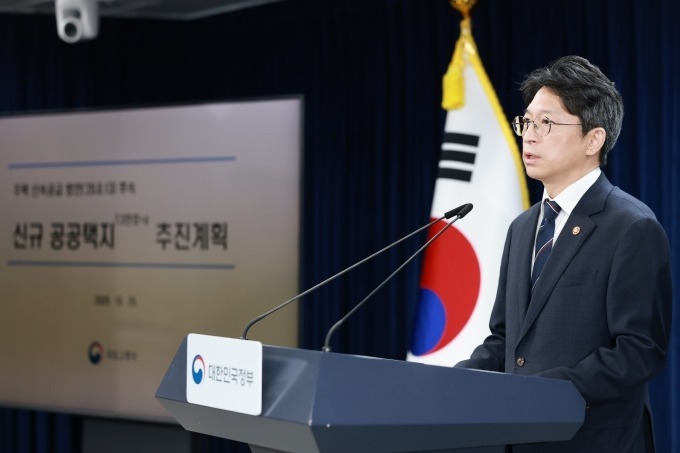
On the 25th, after touring a newly constructed rental housing project for newlyweds in Ungam-dong, Eunpyeong-gu, Seoul, President Lee attended a "field visit and communication forum to properly promote public housing" held at Eunpyeong-gu Office, stating "public rental housing should be an option that the middle class can easily choose in terms of location, floor area, and quality" and "it is important to make it serve as a reliable housing ladder in the process of securing one's own home."
"Must shed the image of appearing insufficient"…Supply of 190,000 universal public rental units
President Lee identified "stigma effect" and "low marketability" as limitations of existing public rental housing policies. He stated, "Until now, when people heard 'public rental housing,' there was a strong perception that it was a place where people in difficult circumstances lived in small areas in remote locations and received support, which created a poor impression" and "as the government has changed the name to 'public rental housing' as a policy directive, we must move away from the past image of appearing insufficient and provide spaces where anyone can live without major inconvenience."
According to the "Housing Stability Plan" announced by the government in September, the government plans to supply a total of 1.19 million public housing units through 2030 (an average of 238,000 units annually). This represents a 50% increase compared to the average supply performance over the past 10 years (approximately 160,000 units), marking the largest scale in history. In particular, 190,000 of these units are planned to be supplied as "universal public rental housing" with significantly relaxed income and asset criteria, located in preferred transit-oriented areas with mid-sized units of 84 square meters and high-quality finishing materials, designed to absorb middle-class demand.
"Past reduction in permits has led to current supply shortage…to proceed with momentum"
President Lee also strongly emphasized the need to "maintain public interest" alongside supply pace. He stated, "Since 2022, permits and construction starts have decreased significantly, and with a time lag of over three years, the current supply shortage and market instability have resulted" and urged swift delivery of housing volumes.
However, among experts, there have been ongoing points raised that despite South Korea's long-term public rental housing stock ratio (8.4%) exceeding the Organisation for Economic Co-operation and Development (OECD) average (7.1%), the perceived availability is low due to the need to address limitations in quality standards and urban accessibility.
"Must not kick away the ladder"…Instructs legalization of principled prohibition of sale conversion
Additionally, President Lee instructed the legalization of measures to principally limit the sale conversion of public rental housing. He stated, "If sale conversion is carried out simply because someone lived there first, it amounts to kicking away the housing ladder for the next person to use" and added, "we must thoroughly prepare to ensure that housing supply expansion does not become a new hotbed of speculation."


Loading comments…