

'Suwon-style Resident Autonomy Council' Requires Education and Communication for Citizen Participation
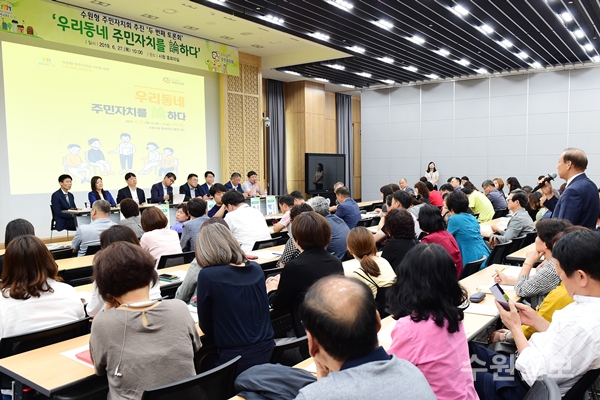
[Suwon Ilbo=Reporter Kang Han-seo] Opinions were raised that substantive citizen participation in the operation of the 'Suwon-style Resident Autonomy Council' requires capacity-building education targeting council members and active communication.
At the 'Suwon-style Resident Autonomy Council Second Forum' held by the city on June 27 in the main conference room of City Hall, Lee Chul-seung, a member of the Suwon City Council's Culture and Welfare Committee, emphasized, "For the Suwon-style Resident Autonomy Council to take root stably and establish itself as a 'citizens' representative body,' substantive participation by residents rather than formal participation is absolutely necessary."
He continued, "Substantive participation by residents can be achieved through sufficient discussion, communication, and learning," and said, "Capacity-building education should be provided so that resident autonomy council members do not depend on civil servants in the operation process, and support should be provided to actively communicate with residents, the city council, and administrative agencies."
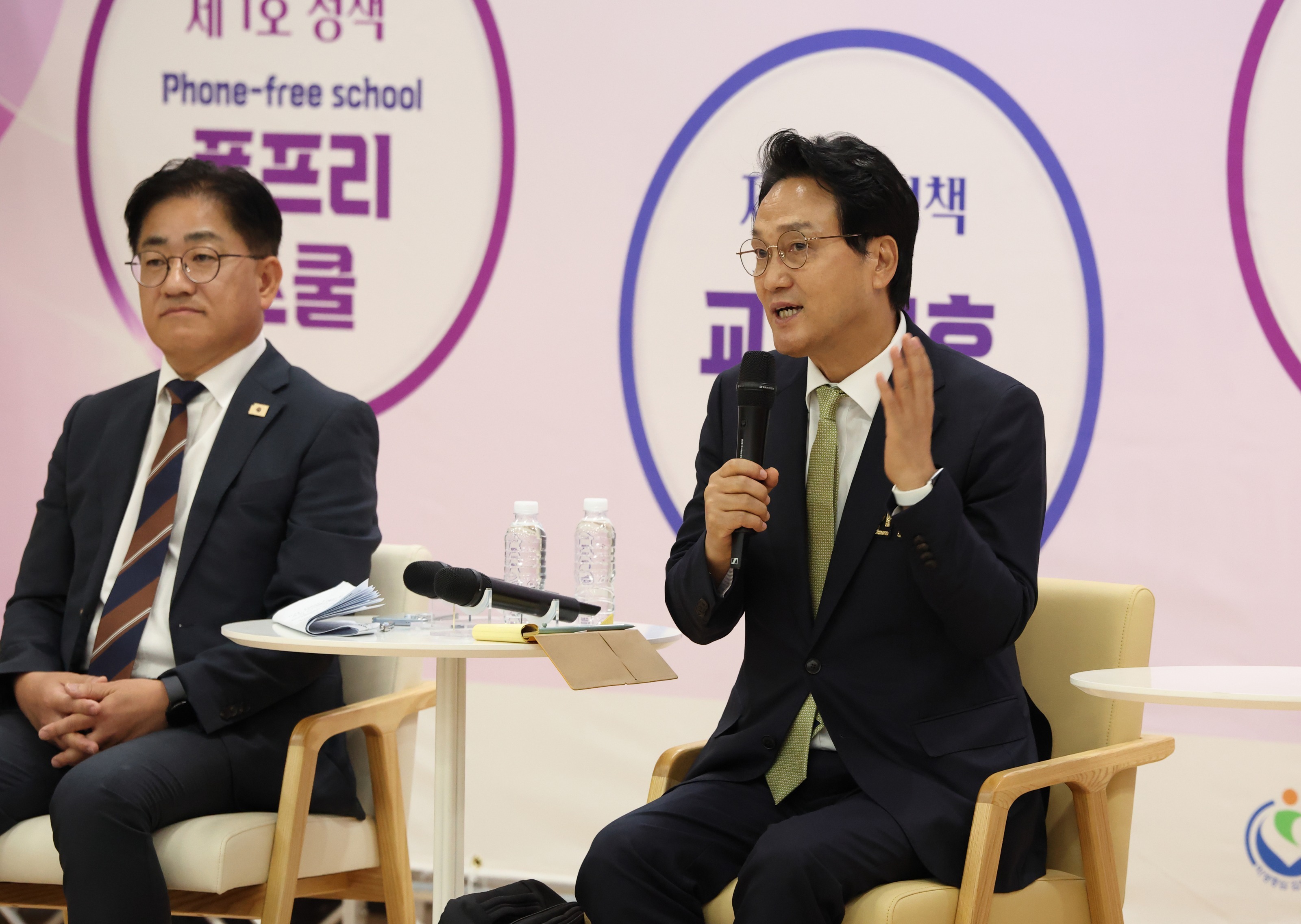
The forum, held under the theme 'Discussing Resident Autonomy in Our Neighborhoods,' proceeded with presentations of excellent resident autonomy council cases and discussions on the direction of resident autonomy council operations.
The forum, moderated by Yu Moon-jong, chair of the Gyeonggi Province Sustainable Development Council's operating committee, was attended by Han Chang-seok, chair of the Suwon Resident Autonomy Council Chairpersons' Conference, Park Sang-woo, director of the Urban Management Research Division at the Suwon Research Institute, Lee Chul-seung, member of the Suwon City Council's Culture and Welfare Committee, and Song Moon-sik, head of the Seoul Metropolitan Government's Regional Cooperation Policy Advisory Group.
The Suwon-style Resident Autonomy Council integrates 'community building' and 'welfare' functions into the resident autonomy functions of the Resident Autonomy Committee that the city previously operated. The city expanded the Resident Autonomy Council, which had been piloted in 3 neighborhoods last year, to 8 neighborhoods this year. It is planned to be implemented in all neighborhoods starting in 2021.
Yu Moon-jong, chair of the Gyeonggi Province Sustainable Development Council's operating committee, emphasized, "For the Suwon-style Resident Autonomy Council to become a citizens' representative body, no one should be excluded from the neighborhood, including multicultural residents, foreign residents, youth, and the elderly."
Han Chang-seok, chair of the Suwon Resident Autonomy Council Chairpersons' Conference, said, "'Resident autonomy' means sharing 'authority' of Suwon City and the mayor with residents," and added, "We will work together with residents, the city council, and administrative agencies to ensure the 'Resident Autonomy Council' is successfully established and draw out citizen participation."
Kim Gwang-su, head of Suwon City's Resident Autonomy Division, stated, "Suwon City plans to review the various opinions raised at this forum and actively reflect them in resident autonomy council projects," and promised, "We will continue to listen to residents' opinions."
At the forum, the Suwon Songjuk-dong and Haenggung-dong neighborhoods and Dangjin City's Resident Autonomy Council presented excellent resident autonomy cases. Songjuk-dong and Haenggung-dong were selected as 'Excellent Resident Autonomy Council Cases' in 2018 and 2016, respectively, and received commendations from the Minister of the Interior and Safety.
Loading comments…