


Paldal-gu's 'Performance Point System'... Carrots Along with the Stick
“Both the stick and the carrot...”
As the civil service society faces tension amid calls to remove incompetent public officials, Suwon's Paldal-gu has introduced a performance point system tailored to the district's characteristics alongside the existing personnel framework, drawing attention as it enhances work efficiency and tightens organizational discipline.
It is a so-called ‘vibrant personnel administration system’ where employees are evaluated internally and either rewarded or penalized. While it appears ‘vibrant,’ its actual nature is cold and strict, so it would be more apt to describe it as bringing a chilling wind.
An official from Paldal-gu stated, “Starting this year, we are implementing the performance point system to reform negative atmospheres such as responsibility avoidance and mediocrity among civil servants and to foster a vibrant workplace environment.”
The performance point system is not merely an evaluation of task processing, but a comprehensive assessment that also evaluates courtesy, demeanor, and the quality of civil complaint services as public officials.
The evaluation targets all 332 employees of grade 5 and below in Paldal-gu. Evaluations include task-related factors such as automobile tax and property tax collection performance, budget savings, and work improvement results, as well as civil complaint service quality including telephone courtesy and citizen responses (praise, discourtesy, etc.).
Since automobile and property taxes are subject to a district-wide collection encouragement initiative, performance naturally becomes part of the evaluation, and budget savings and work improvement results have their own evaluation criteria. Telephone courtesy reflects evaluation results conducted by the city twice annually across all departments and all civil servants.
Citizen responses are evaluated based on objectively verifiable content, including the city website's ‘Praise’ section, press coverage, and direct correspondence from citizens.
An official from Paldal-gu's personnel department stated, “To ensure fairness and objectivity in evaluation, we will grade and score based on objective data, and then organize and conduct evaluation through a review committee based on these comprehensive assessments.”
Evaluation materials are managed at least on a quarterly basis, and the final evaluation is conducted once annually at year-end as a principle. Through this, the performance points of all 332 Paldal-gu employees will be ranked.
An official from Paldal-gu said, “Civil servants with high performance points are given the option to work in their preferred departments at the time of transfer, and receive various incentives such as commendations, recommendations, and overseas travel recommendations.”
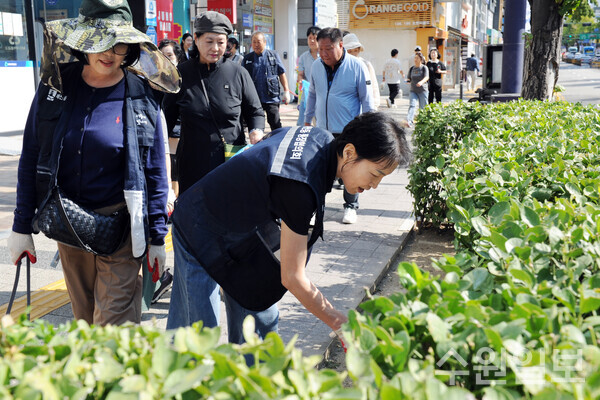
However, the bottom 10 in performance points face personnel penalties, and employees unable to transfer between districts or wards are subject to administrative service commands (40 hours annually) including license plate seizures for overdue vehicles outside work hours and enforcement of illegal parking violations.
Performance point data will be used as personnel records in the future along with existing personnel evaluation data.
A civil servant from Paldal-gu's General Affairs Division said, “There is no resistance within the organization to imposing administrative service commands on those with poor performance scores, as evaluations are conducted based on fair and objective criteria,” indicating acceptance.
An official from Paldal-gu's General Affairs Division personnel department stated, “The performance point system is designed to increase citizen satisfaction with administrative services, establish a fair compensation system for civil servants, and foster an organizational culture of creative and productive work.”


Loading comments…