


Hwaseong Special City Records 1.09 Fertility Rate, Tops Gyeonggi Province in 2025
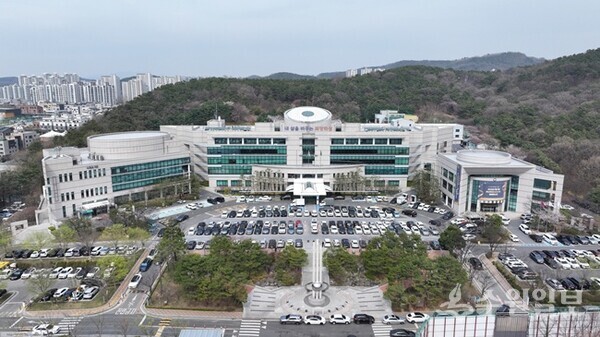
[Suwon Ilbo=Reporter Jeong Jun-seong] Hwaseong Special City's total fertility rate for 2025 was recorded at 1.09, marking the top position in Gyeonggi Province.
According to the announcement from the Korea Statistical Information Service (KOSIS) under the National Statistics Office on the 25th, Hwaseong City recorded 8,000 births, the highest among basic municipal governments nationwide. This represents an increase of 799 births compared to 2024 (7,201 births), continuing an upward trend for three consecutive years. This figure exceeds 10 percent of the total births across Gyeonggi Province (76,346 births).
During the same period, births in municipalities with populations exceeding 1 million within the province were tallied at 7,000 in Suwon, 5,800 in Yongin, and 5,400 in Goyang. Hwaseong City's total fertility rate significantly outpaces both the Gyeonggi Province average (0.84) and the national average (0.80), demonstrating a clear upward trend despite the nationwide low birth rate trend.
The city established a dedicated department to address low birth rates and allocated 544.5 billion won for 75 projects in the 2026 budget. Major items include △121.2 billion won for childcare support services △8.6 billion won for birth incentive payments △7.4 billion won for infertility treatment support for couples, and newly established mortgage interest support programs for multi-child households, establishing a comprehensive support system.
In particular, since January 2023, the city has expanded birth incentive payments to alleviate the economic burden on childbearing families, providing △1 million won for the first child △2 million won each for the second and third children △3 million won for the fourth and subsequent children, with a total payment amount of approximately 11.2 billion won in 2025.
Additionally, since May 2023, the city relaxed the multi-child standard from the existing three children to two children, expanding the eligible beneficiaries. Currently, approximately 70,000 households (approximately 240,000 people) are receiving benefits for the use of public facilities including public parking lots, public camping grounds, and performance halls.
The city has continuously expanded childcare infrastructure, hosting the nation's largest scale of public and private child care centers and operating 'Hwaseong-style Child Care Centers,' 'Hwaseong-style Holiday Child Care Centers,' and 'Together Care Centers' to respond to dual-income and emergency childcare demands.
Yun Jeong-ja, Head of the Low Birth Rate Response Division, stated, "Along with the increase in birth numbers, we will continue to make efforts to overcome low birth rate challenges so that both children and parents can enjoy happy lives" and added, "We will strengthen practical support at all stages from marriage, pregnancy, childbirth, to childcare."


Loading comments…