


Public Opinion Column "What matters now?"—Citizens asking as government stalls in factional fighting
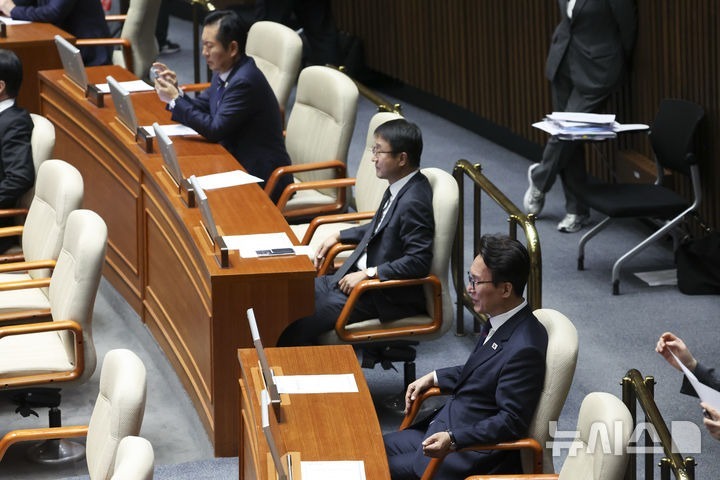
The Quagmire of Factional Politics and Loss of Essence
The Democratic Party's internal conflict has reached an extreme. Despite repeated apologies from party leadership over allegations of Shincheonji involvement and three-way coalition that surfaced during the party convention process, power struggles between pro-Moon and pro-Yoon factions have escalated into head-on collision, severely shaking state governing capacity and party unity.
Senior lawmakers urged reconciliation and dialogue, saying "do not burn down three grass houses," but amid backlash from hardliners within the party countering "keep going your way," politics of coexistence has lost its place. As unproductive factional conflicts and ideological battles intensify, the party's approval rating continues to decline, reaching a point where it has lost ground to the opposition People Power Party.
The famous line from the film "The Wailing," "What matters now?"—is not merely a lamentation from the screen. It is the desperate voice that ordinary citizens exhausted under the shadow of high prices and high interest rates, and people suffering from deepening inequality, now wish to cry out toward the ruling party.
As sociologist Jürgen Habermas warned, when mutual understanding and listening through dialogue in the public sphere disappear, democracy faces a crisis of extreme division. The current internal conflict of the ruling party is following precisely that trajectory. The problem is not a lack of voices, but rather that exclusive intolerance—where each asserts claims and bloodshot rhetoric, defining the other as an "evil" to be eliminated—is fueling the conflict. Stigmatization and blame over past remarks and certain religious-related allegations, strong-against-strong standoffs that refuse acceptance even after apologies, are a self-portrait born of excessive partisan logic.
What the people hoped for from the ruling party was not internal power struggles or black-and-white politics. The most solemn responsibility given to the governing party is to handle legislative tasks for economic revitalization and livelihood stabilization, and to overcome national crises. Yet as the ruling party, which should be the central axis of state affairs, wastes political resources on resolving internal conflicts, livelihood issues directly connected to people's lives are being pushed to the back burner.
The Warning from Support Rate Reversal: Public Sentiment Flows Like Water
The reversal of party approval ratings in opinion polls is a grave warning light from public sentiment. Public sentiment does not guarantee eternal support for a specific party. The people's disappointment with the governing party, unable to care for the lives of ordinary citizens and mired in self-destruction, is fully demonstrated in the numbers of declining approval ratings.
Politics that rely on the opposition party's reflected gains or rallying of political camps while calculating party gains and losses has clear limitations. A party that cannot resolve the suffering felt by the people and merely repeats internal power struggles will inevitably lose support, whether left or right.
Toward Politics of Coexistence and Mutual Prosperity
For the Democratic Party to regain lost public trust and recover its status as a ruling party, immediate structural reform and shift in state affairs policy are urgent.
First, the practice of using unproductive religious and factional disputes—the starting point of conflict—as instruments of political contention must stop immediately. More important than determining right and wrong is party stability to prevent mutual destruction, and the restoration of "listening and dialogue" that sets aside mutual accountability and animosity is the first step toward reconciliation.
Furthermore, the party must move away from the unilateral attitude that refuses mediation even from senior members by saying "keep going your way" and open channels for internal party unity that accommodate diverse opinions. A political culture of coexistence that views political opponents not as targets for elimination but as partners for cooperation must be restored.
Above all, the party must concentrate all its resources on resolving livelihood issues. It must devote itself to legislation and budget reviews for stabilizing grocery prices, stimulating the stagnant economy, and protecting vulnerable classes. The party must remember that it is solely the people who suffer while the National Assembly stalls in political controversy, and both ruling and opposition parties must work together on legislation addressing people's livelihoods.
The true purpose of politics lies in wiping away the people's tears and caring for their lives. If the party fails to recognize "what matters now" and remains absorbed only in internal power struggles, it will not escape the stern judgment of public sentiment. An end to unproductive internal strife is urged, and a return to politics of coexistence and inclusivity rooted in the people's lives is called for.



Loading comments…