


Gyeonggi Province Compiles 42.1946 Trillion Won Budget for 'Livelihood Protection'...Submitted to Gyeonggi Provincial Council Today
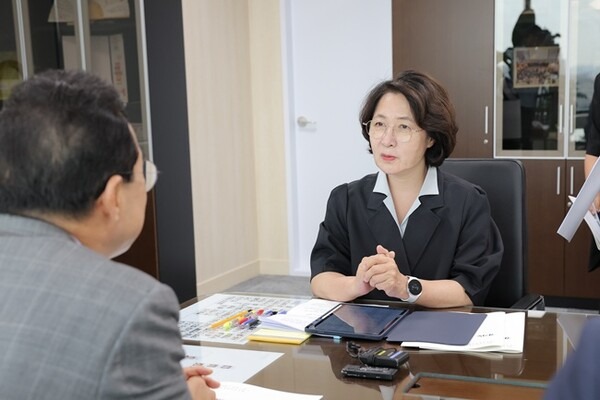
Gyeonggi Province compiled a 42.1946 trillion won budget plan for 2027 that prioritizes the lives and safety of residents, protection of vulnerable groups, and livelihood stability despite difficult fiscal conditions, and submitted it to the Gyeonggi Provincial Council on the 13th.
This budget plan, dubbed the 'Livelihood Protection Budget,' was compiled around three principles: ▲prioritizing life, safety, vulnerable groups, and livelihood projects ▲aggressive improvement of expenditure structure to overcome fiscal crisis ▲focused investment to create future growth foundations.
The 2027 budget plan increased by 2.1369 trillion won (5.3%) from this year's main budget of 40.0577 trillion won. However, this is mainly due to an increase in national treasury subsidy projects. Available resources that Gyeonggi Province can independently use decreased significantly from 4.0595 trillion won this year to 1.65 trillion won next year, a reduction of 2.4095 trillion won.
Facing a situation where available resources decreased by over 2 trillion won, Gyeonggi Province utilized local bonds to their maximum extent, issuing 246.2 billion won, and additionally utilized 410 billion won from the Integrated Fiscal Stabilization Fund and 100 billion won from the Regional Development Fund (total 700 billion won), thereby compiling 3.0494 trillion won in available resources to maximize protection of livelihood budgets.
Resources were allocated to projects directly related to residents' lives, including residents' life and safety, protection of vulnerable groups, livelihood projects, and disaster prevention and response, support for the elderly, disabled, and children and other vulnerable groups, and care and livelihood stability.
The budgets distributed by the province include: ▲246.5 billion won for school meal support for elementary, middle, and high schools under the Gyeonggi Provincial Office of Education ▲37.5 billion won for support of opportunity income for farmers and fishermen in Gyeonggi Province ▲55.4 billion won for maternal and newborn health management support ▲41.6 billion won for improvement of childcare facility staff treatment and substitute workforce support ▲57.7 billion won for Gyeonggi Province Youth Basic Income ▲436.1 billion won for public management system operation of city buses ▲27.6 billion won for additional support of disability activity support allowances ▲297.6 billion won for long-term care facility allowances for the elderly ▲90.6 billion won for local river maintenance projects ▲10.8 billion won for customized job projects for disabled people ▲35 billion won for meal support for children with food insecurity ▲3.3 billion won for operation expenses of senior welfare centers ▲61.6 billion won for local currency issuance support (small business support), and others.
Considering the financial burden on municipalities and counties, it was decided to maintain the subsidy rate for provincial subsidy projects at the previous year's rate. This signifies the province's commitment not to pass financial burdens on to municipalities and counties despite difficult provincial finances.
An increase in fiscal efficiency through aggressive improvement of expenditure structure is also noteworthy. Nevertheless, the province maintains a policy to secure necessary investment resources for fostering advanced future industries such as artificial intelligence and semiconductors and for expanding essential infrastructure such as transportation and SOC, even in difficult fiscal conditions.
Specifically, the budget includes: ▲2.1 billion won for operation of the Gyeonggi Province Semiconductor Technology Center ▲2.3 billion won for technology development projects ▲3 billion won for introduction of Gyeonggi autonomous transit buses ▲900 million won for the Gyeonggi AI Innovation Cluster project ▲2.5 billion won for the Gyeonggi Sunshine Self-Reliance Village, and others.
While some statutory expenses and public official salaries (3 months) could not be reflected due to difficult fiscal conditions, Gyeonggi Province will make every effort to expand national treasury support and secure additional resources. The province plans to supplement unallocated essential budgets through supplementary budgets in the future.
"The 2027 budget plan is a 'Livelihood Protection Budget' that reflects the determination to protect livelihood that must be protected despite difficult fiscal conditions, boldly reduce expenditures that can be reduced, and not stop investment for the future," said Jung Doo-seok, Director of the Planning and Coordination Office of Gyeonggi Province.

Loading comments…